Why Stay-at-Home Moms Are Blamed for School Issues
When children struggle at school, stay-at-home mothers often face blame. This article explores the emotional toll and calls for shared, compassionate responsibility.
Home > Parenting Challenges > Parenting Mistakes > Not Listening to Children
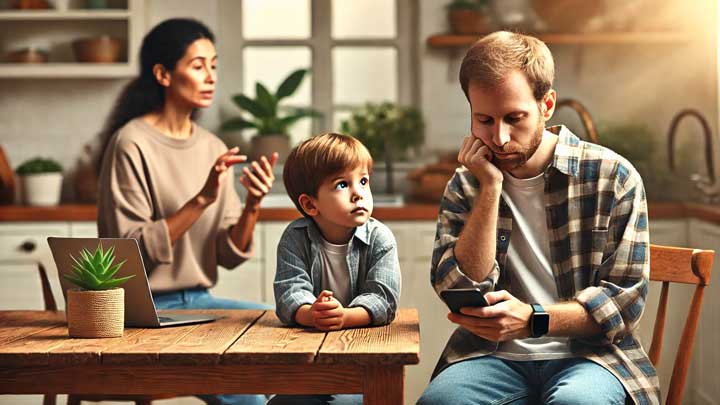
“Not now.” “I’m busy.” “Later, okay?” These words may sound harmless, but when said often, they echo in a child’s heart as *“I’m not important.”* Children don’t need perfection—they need presence. And one of the most powerful ways to offer presence is through listening. When children feel heard, they feel seen, valued, and safe. When they’re ignored, interrupted, or dismissed, they start to shut down. Over time, they may stop sharing entirely. This article explores why listening to your child is foundational to emotional connection—and how to build the habit even when life feels noisy.
Listening isn’t just hearing words—it’s giving attention, empathy, and space for your child’s thoughts, feelings, and voice to exist without being rushed, judged, or shut down. True listening means eye contact, body language, nodding, asking follow-up questions, and withholding the urge to fix, lecture, or minimize. It’s about being curious rather than corrective. Children who are truly listened to feel safe to express themselves, even when they’re wrong, upset, or afraid. And that kind of space? That’s where trust and self-worth begin to grow.

When children struggle at school, stay-at-home mothers often face blame. This article explores the emotional toll and calls for shared, compassionate responsibility.

Many children’s emotional needs go unseen by busy, well-meaning parents. This article explores why that happens and how to repair the damage—before it becomes long-term.

Natural parenting combines eco-conscious choices with intuitive, holistic care to foster a nurturing environment for children and the planet.

Using fear instead of reason may get short-term results—but it damages your child’s trust, confidence, and relationship with you. Learn why fear isn’t a teaching tool.

Parents who expect perfection often believe they’re helping. But for children, harsh criticism can lead to deep emotional wounds and rebellion. Here’s how to shift from judgment to connection.
When you stop and truly listen, something powerful happens. Your child begins to believe, *“My voice matters.”* That belief grows into self-worth, into better behavior, and into lifelong trust. You don’t have to fix every problem. You just have to be present. Children who are heard learn to express, regulate, and stand up for themselves—because they’ve felt what it’s like to be respected, even in their messiest moments. Listening isn’t passive. It’s parenting. It’s connection. It’s healing.
Do you lead with empathy or correction? Do you listen to understand or to fix? Our parenting quiz helps you identify how you naturally respond to your child’s voice—and what small shifts can help you become more present, more validating, and more trusted. Listening isn’t just a skill. It’s a gift. This quiz helps you offer it more intentionally, more often, and more meaningfully.
Your child’s stories, feelings, and thoughts are not interruptions. They’re invitations. To connect. To teach. To grow. When you choose to listen—not just once, but over and over—you become the safe place they return to. You teach them how to be heard without yelling, seen without performing, and valued just for being. That’s the power of listening. That’s the parent they’ll remember forever.